


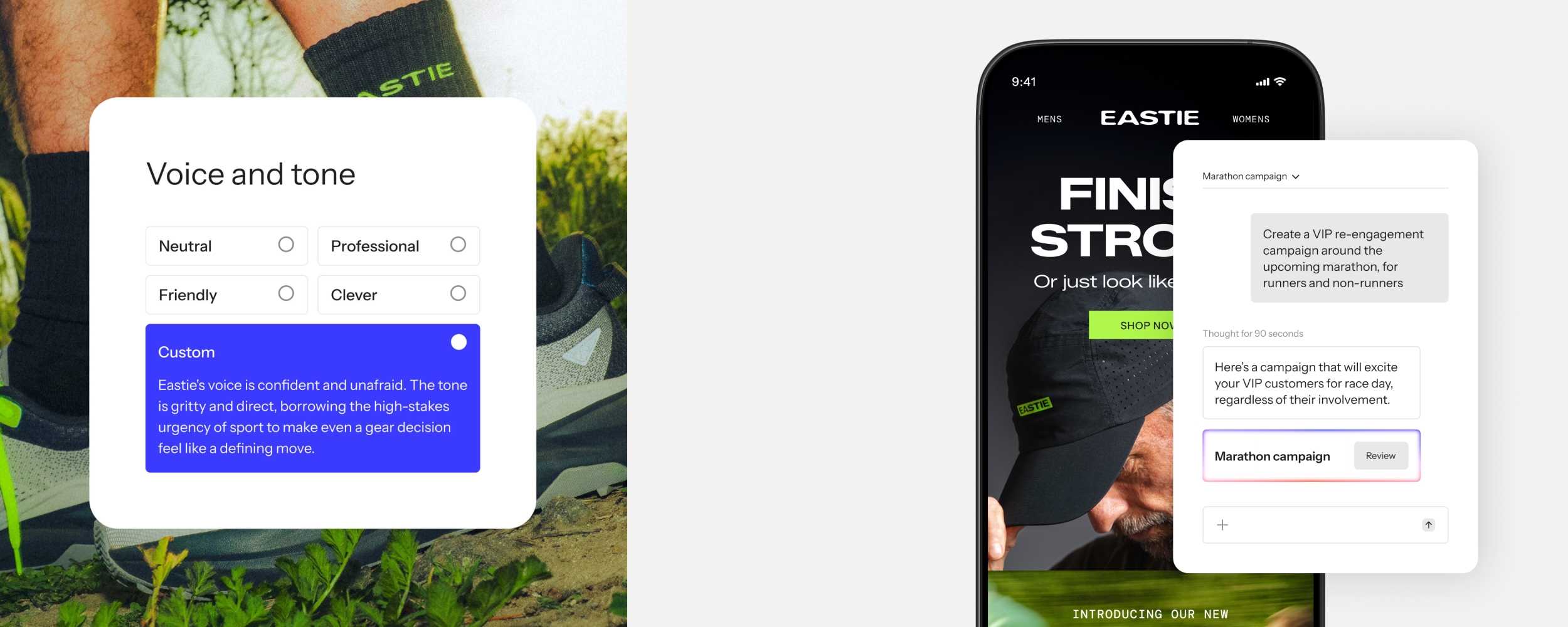
How we build composable ecommerce experiences with Klaviyo.
Klaviyo works when it is built into the commerce stack rather than added afterwards. It runs on your order and browsing data, so that data has to be clean before the marketing gets clever.
We set up tracking properly, then build the flows that earn their place. Welcome, abandoned cart, post purchase, winback. On headless storefronts we make sure tracking survives your next release, which is where most Klaviyo setups quietly break.
Is Klaviyo right for my ecommerce brand?
Who it's for
Brands with enough customer data to be worth using well, and a marketing team that wants to run lifecycle programmes without asking a developer every time.
DTC brands with repeat purchase potential
Teams running email and SMS together
Businesses whose flows have gone stale and nobody owns them
What it solves
Email goes to everyone because the segmentation data isn't trustworthy
Tracking breaks every time the storefront ships
Abandonment and post-purchase flows don't exist, or don't reflect real behaviour
Email and SMS are run as two separate programmes
Common questions about integrating Klaviyo for your ecommerce brand.
Is Klaviyo worth it compared to a cheaper email tool?
It is when your revenue depends on repeat purchase. Generic email tools send campaigns. Klaviyo reacts to what someone actually did on your store, which is where the revenue sits. If you send a monthly newsletter and nothing else, you are paying for capability you will not use.
How much revenue should email and SMS drive for an ecommerce brand?
It varies a lot by category and repeat rate, so treat any single benchmark with suspicion. The more useful measure is your own trend. If owned channels are flat while paid acquisition costs climb, the lifecycle programme is the cheapest place to find growth.
What flows should we have running before anything else?
Welcome, browse abandonment, cart abandonment, post purchase and winback. Those five cover the moments where intent is highest. Most brands have some of them switched on and none of them reviewed since launch, which is usually where the quick wins are.
Does Klaviyo work with a headless storefront?
Yes, though it takes more care. On a headless build the events Klaviyo relies on have to be sent deliberately rather than picked up by a script tag. Getting that instrumentation right at build time avoids flows that quietly fire on bad data later.
How long does a Klaviyo setup take?
Two to four weeks to get the integration, segments and core flows properly in place. The ongoing work is the part that matters though, since flows need reviewing against real results rather than being set once and left.
Brand partners
Forging paths, in good company.
CONTACT US
Let's build better commerce, together.
Give us a call at +1 (833) 866-5423 or leave us a note. We'll get back to you in no time.
Thank you! We'll be in contact with you shortly.
Looking forward to building better commerce.
Oops! Something went wrong while submitting the form.